Underwater Coalfields
The Underwater Coalfields, an extinct volcano whose interior was invaded by the sea, represents Captain Nemo's ultimate achievement in self-sufficiency and his complete severance from terrestrial resources. Discovered by chance, this immense cavern functions as a secure, secret harbor for the Nautilus and, more importantly, as an inexhaustible mine for the sodium that powers the ship's electrical systems. The site is a testament to Nemo's engineering genius and his philosophy of drawing everything he needs from the ocean alone.
Discovery and Description
Captain Nemo discovered the cavern by chance, a hidden refuge that he describes as "secure, convenient, secret, and sheltered against winds from any direction." The Nautilus enters this lagoon through a natural channel that opens ten meters below the surface of the ocean. The cavern itself is a vast, inverted funnel-shaped vault, measuring about two miles in diameter and 500 to 600 meters in height, with a circular opening at its summit that lets in daylight. The interior is a lake of seawater, its level equal to the outside ocean, surrounded by a sandy beach and volcanic rock formations. The volcanic nature of the pit is evident everywhere, with traces of lava, slag, and basaltic rock, and the air is sometimes filled with sulfurous fumes from smoke holes. The cavern's walls are covered with an enamel polished by the action of underground fires, glistening under the electric light of the Nautilus's beacon.
The Source of Sodium and Coal
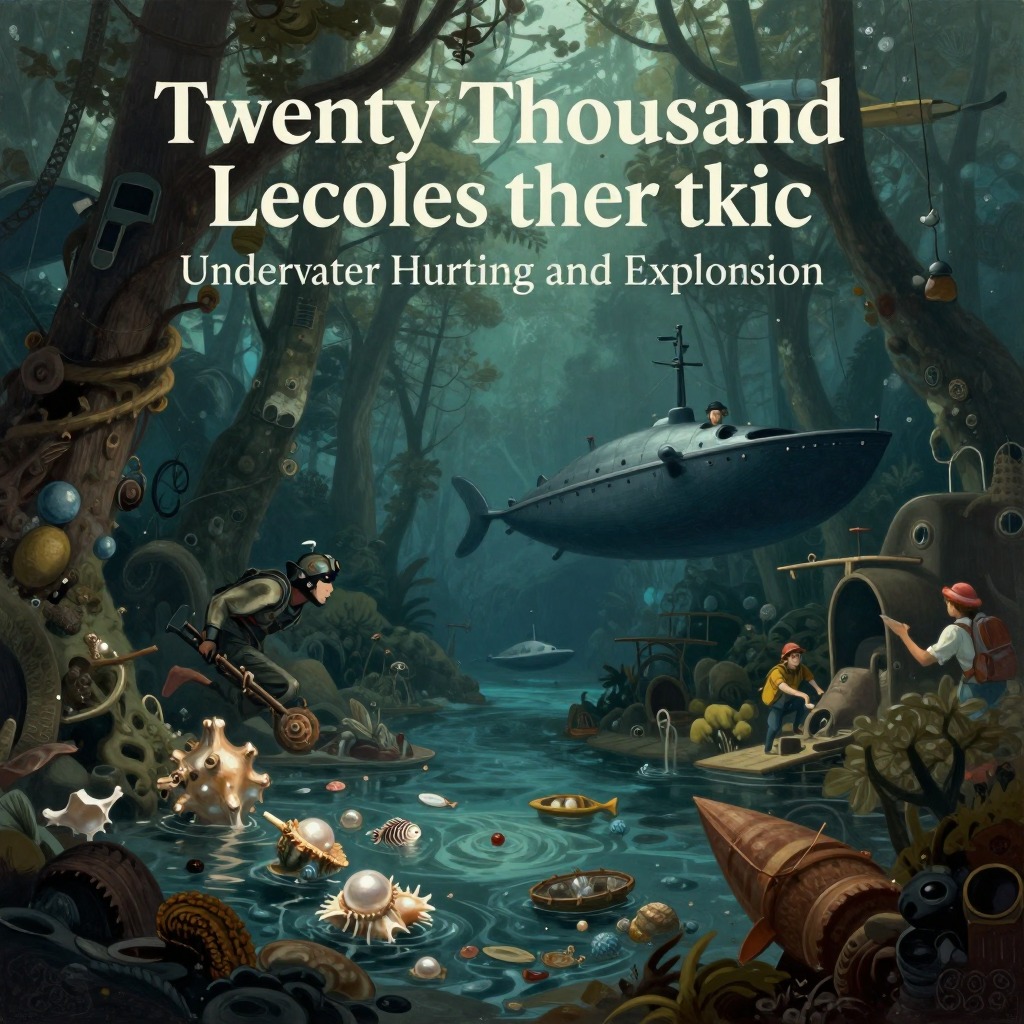
The primary purpose of the Underwater Coalfields is to provide the raw material for the Nautilus's power. Captain Nemo explains that the sea covers entire forests that sank underwater in prehistoric times, which have turned to stone and transformed into carbon fuel. These inexhaustible coal mines lie beneath the waves, and Nemo's men, dressed in diving suits and armed with picks and mattocks, mine this carbon fuel directly from the seafloor. The coal is then used to produce sodium, which is the key component of the Nautilus's powerful electric batteries. The smoke from burning this combustible escapes through the mountain's crater, giving the volcano the appearance of being still active. This process allows Nemo to operate his ship without any need for mines on land, completing his total independence from the terrestrial world.
Exploration of the Cavern
During the Nautilus's brief stay to load sodium, Professor Aronnax, Conseil, and Ned Land explore the cavern's interior. They climb the steep, winding gradients of the volcano's inner walls, passing through fields of pudding stones, trachyte, and black basaltic rock. At higher elevations, they encounter a sparse but resilient vegetation, including spurges, heliotropes, chrysanthemums, and even a clump of dragon trees. Ned Land discovers a hive of bees, from which he harvests honey, and he also manages to wound a bustard, adding fresh game to their provisions. The explorers also find a magnificent cave on the inner beach, where they rest and contemplate their situation. The exploration reveals the cavern as a complete, self-contained world, supporting its own ecosystem and providing for the Nautilus's needs.
Narrative Significance
The Underwater Coalfields episode serves as a powerful demonstration of Captain Nemo's complete autonomy and his rejection of the terrestrial world. It is the physical manifestation of his philosophy that the sea can supply all his needs, from food and clothing to fuel and energy. The cavern is a secret, impregnable fortress, a home port that no enemy could reach. The episode also provides a moment of relative peace and exploration for the protagonists, a brief respite before the Nautilus resumes its journey into the Atlantic and towards its final, tragic confrontations. The site underscores the novel's central theme of the sea as a source of both freedom and power, a realm where a man can live entirely on his own terms, beyond the reach of human laws and society.